


What Happens to Baling Plastic After Feed-Out?
Why disposal is becoming a bigger issue for Irish farms
For most farmers, the baling job isn’t finished when the last bale leaves the field.
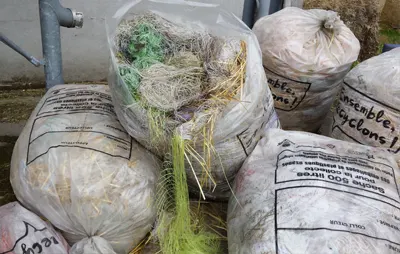
Once silage has been fed out, the challenge becomes dealing with the plastic. Stretchfilm, NRF, netwrap and other baling materials need collecting, storing and eventually recycling or disposal. On busy livestock farms, this can quickly become another task competing for time.
As environmental expectations continue to increase across agriculture, farmers are also paying more attention to the amount of waste generated during the baling process and how easy that waste is to manage.
The challenge with traditional baling materials
One of the biggest frustrations can be separating different plastic types before recycling.
When materials contain different polymer types, recycling often requires additional sorting and handling. This not only adds labour but can also make collection and recycling more complicated.
Many farmers simply want a solution that works efficiently in the field and remains straightforward to deal with once the bale has been opened.
A different approach to round baling
EZ Web was developed to simplify both baling and recycling.
Rather than combining multiple plastic types, EZ Web uses materials that are compatible with existing agricultural plastic recycling streams. Because of this design approach, used EZ Web can be recycled alongside stretchfilm, eliminating the need for separate collection streams on farm.
Less plastic to manage
Another advantage is the amount of material involved.
Compared with Net Replacement Film (NRF), EZ Web requires significantly less plastic per bale while maintaining bale integrity and performance. Less material entering the system means less material requiring storage, transport and recycling after feed-out.
Looking beyond the bale
For many Irish farmers, sustainability is no longer simply about reducing inputs. It is about making everyday jobs easier while reducing waste and improving efficiency.
Solutions such as EZ Web demonstrate how innovation in crop packaging can help simplify farm operations long after the baler has left the field.